The Core Idea: Independent Trials
Every spin is an independent trial governed by a random number generator (RNG). At the moment you hit spin, the game samples fresh values and maps them to reel positions. The animation is a reveal; the decision is already made. Independence means no memory: a long losing streak does not increase the chance of a win on the next click.
How RNG Output Maps to Reels
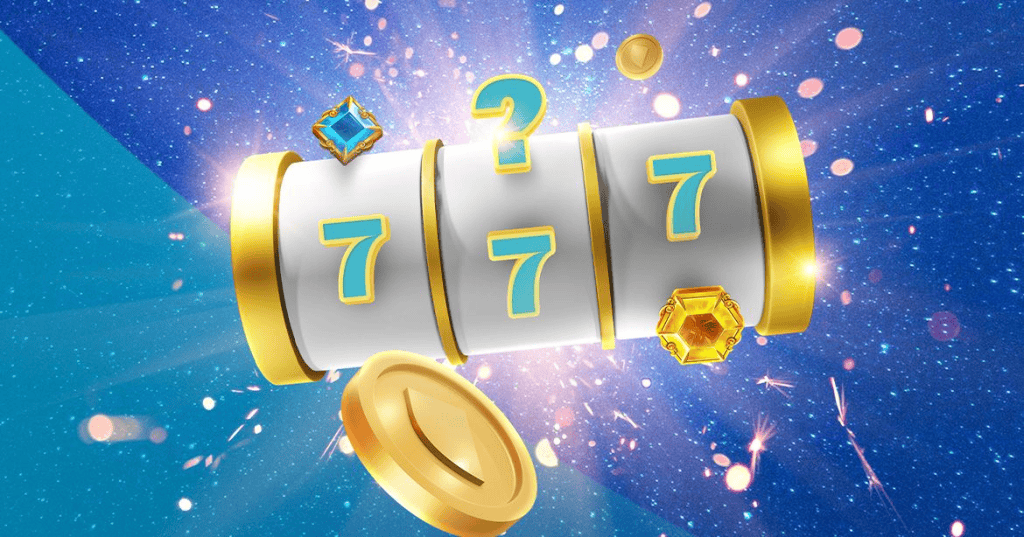
RNGs produce integers at high frequency. The game converts those integers into indices on reel strips ordered lists of symbols with deliberate repetition. High-value symbols appear fewer times to keep big hits rare; low and mid symbols appear more often to maintain momentum. The mapping is deterministic given the sampled numbers, but because the sampling is random and fast, players experience unpredictability that’s both fair and irreducible.
Pseudorandom, Not “Guessable”
Most systems use cryptographic-grade pseudorandom algorithms, seeded and stepped so that outputs are effectively unpredictable in practice. “Pseudorandom” doesn’t mean manipulable by players; it indicates that the stream is generated algorithmically rather than from physical noise. Security measures prevent access to seeds and step counters, and the game samples values at timescales too fine to synchronize by hand or macro.
Testing, Certification, and Versioning
Before release, a slot build undergoes audits where labs verify:
The certification process exists to prove that the RNG and math behave as declared, not to boost player odds. The key is reproducible testing that demonstrates independence and the promised return profile over huge samples.
- RNG quality: Statistical batteries (e.g., dieharder-style suites) check distribution and correlation.
- Paytable math: Simulations confirm long-run return-to-player (RTP) and prize frequencies.
- Configuration integrity: Multiple RTP versions (e.g., 96%, 94%) are identified so operators deploy correctly.
After certification, code integrity is safeguarded; gameplay patches that touch math require re-testing.
Common Player Myths
Before the quick myth list, keep in mind that illusions arise because human pattern-detection is strong while randomness is noisy and streaky by nature.
- “Time of day affects luck”. RNGs aren’t clock-biased; outcomes don’t improve at night.
- “The game cools down after a big win”. Independence blocks “cooling” or “warming”.
- “You can time the spin”. Sampling occurs faster than human reaction granularity and without accessible seed info.
These superstitions persist because variance routinely clusters wins and losses, creating stories that feel plausible but remain false.
What Players Can Control
You cannot influence RNG output, but you can manage exposure how fast you push through variance and how long you can wait for features. Choose volatility that fits your nerves, size bets for session length, and use simple limits (stop-loss, win caps) to keep emotions from rewriting your plan mid-session.
Conclusion
RNGs make slots fair by making them unpredictable and independent. Certification ensures the math matches the promise; superstition explains the rest. When you accept that the engine cannot be steered, you focus on what matters: pacing, limits, and picking games whose rhythm you actually enjoy.